
How Graphene is Hastening the Rise of Quantum Computing
Quantum computing has long been regarded as the next “big thing.” Now it’s looming ever larger on the horizon, and graphene is part of the reason for that.
Dr. Rajamani Vijayaraghavan, head of the Quantum Measurement and Control Laboratory at the Tata Institute of Fundamental Research (TIFR), told Swarajya Magazine in September 2020 that an everyday quantum computer — i.e., one “that is practical and commercial in nature,” as he put it — is still a “couple of years” down the road.
But there have been strides in that direction for several years, and experts relish all that these computers might have to offer. So grand is their processing power, in fact, that it is believed they will be able to meet some of the world’s greatest challenges in a fraction of the time it takes classical computers. They can hasten the development of environmentally friendly technology, for instance. They can shorten the timeline for the development of drugs and vaccines. They can make market forecasting more sophisticated and supply chains more efficient.
The caveat is that the quantum bit (i.e., the qubit), the basic building block of quantum computers, is notoriously sensitive to its environment. In fact, until last year they always had to be supercooled at minus-272 degrees C (1 kelvin). They simply could not operate at higher temperatures.
This is one of the places graphene could come into play. Researchers, already aware of the substance’s superconductivity, discovered in 2020 that graphene was the first material capable of serving simultaneously as a superconductor, insulator and ferromagnet. That resulted in the further revelation, in February 2021, that when three layers of graphene were twisted — one more layer than had previously been attempted — the material’s conductivity was enhanced to the point that scientists could envision them operating at room temperature.
Also in February 2021 came a further development in the field of valleytronics, which seeks to exploit a property in graphene known as “the valley,” which is not unlike the spin of electrons in other materials. This new method again involves twisting layers of graphene — this time two, instead of three — after they are placed between a ferromagnetic insulator. It is expected that this method will increase processing speeds.
A few months earlier, in October 2020, scientists discovered that a bolometer, a device that detects the tiniest of energy changes in quantum computers — changes that can negatively impact qubits — operated far more quickly and efficiently when it was made of graphene as opposed to gold palladium alloy, as had previously been the case.
Taken together, these developments indicate that we are drawing ever nearer to seeing quantum computers become a reality. While experts caution that there are “many, many hurdles yet to overcome,” these are promising strides in the right direction.
Cloud Storage: What It Is, Why it Helps and How It’s Secured
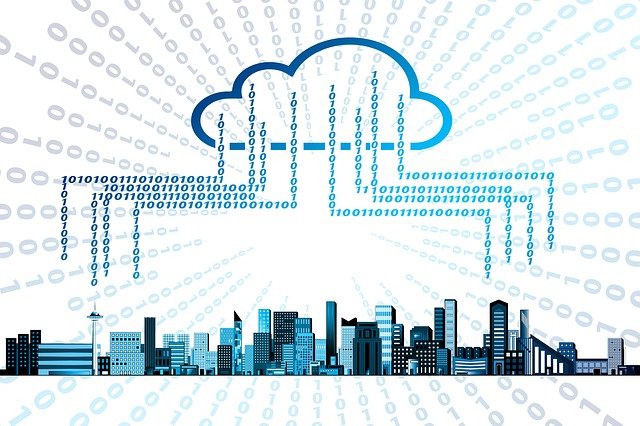
Whether we realize it or not, we are constantly impacted by cloud storage. Perhaps you begin your work day by opening a Google Doc or an email sent to you via Gmail. Both of those platforms are dependent upon cloud storage. Or perhaps you spend your lunch hour checking Facebook, Instagram or YouTube. All those platforms make use of it as well.
It’s all around us, whether we’re downloading cat videos or toiling away on a big project, and impacts us most directly when we want to back up or store our own personal data — as will increasingly be the case. Spurred by the advent of such cloud-storage systems as Google One, Amazon Cloud and OneDrive, the cloud storage market size is expected to be $49.13 billion in 2021, then jump to $297.54 billion by 2028, a CAGR of 25.3 percent.
Cloud storage is particularly popular in the business world, as some 85 percent of enterprises around the world use it.
But what is it, really?
It consists not of storage in some mystical place free of Earth’s bounds (as its name might suggest), but in far-off data centers, where files of all sizes are secured and backed up but also constantly accessible to owners via the Internet. In fact, users — who pay for the service either via subscription or on a per-consumption basis — can access their information courtesy of any device.
It is, in other words, a sizable step beyond storing information on thumb drives or external hard drives. It has also been particularly useful during the coronavirus pandemic, given many companies’ pivot to remote work. Files can be shared, and it is possible for multiple users to access a file at the same time. In other words, collaborative projects are a breeze when cloud storage is involved.
Security is, of course, a constant concern, especially given how much data is going to be out there in the years to come. While there were some 33 zettabytes of data (the equivalent of 33 trillion gigabytes) throughout the world in 2017, that total is expected to mushroom to 175 zettabytes in 2025. And rest assured that cybercriminals are always lurking.
The countermeasures adopted by cloud servers are considerable. Most take steps such as encrypting files, storing them behind firewalls, and availing users of two-factor authentication. Some even resort to artificial intelligence to scan their system for weak spots.
In addition, most services make multiple copies of files and store them at various data centers — a practice known as redundancy — to preclude their loss in a natural disaster. A 2019 report even noted that there are occasions where these services back up data on magnetic tape, often considered a relic of a bygone era but actually a reliable, secure means of storage.
The long and short of it is that we continue to be enveloped by the cloud. It is all around us, at all times, and enables us not only to store an ever-increasing amount of data, but also to access and share it. All of that is valuable — particularly the latter, and particularly now.
4 Industries that Benefit Greatly from Cloud Storage and Cloud Computing
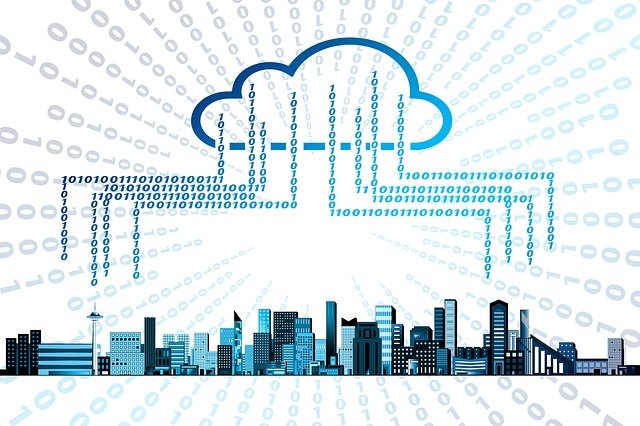
In 2016, Frederic Kerrest, COO and co-founder of the identity tech startup Okta, told Inc. that business was only “in the first inning” of cloud computing adoption. It is safe to say that we have moved along to subsequent innings. Snowflake, a Silicon Valley cloud data warehousing company, on September 15, 2020 raised $3.4 billion in what is the largest software IPO ever.
Now just about everyone wants his or her turn at bat (to torture the baseball metaphor a bit more).
Precious few industries have been left unaware of the advantages the cloud can offer. It is estimated, in fact, that 90 percent of companies are now reaping its benefits, and that spending on cloud infrastructure services will increase from $39.5 billion in 2019 to $63 billion by 2021.
Those benefits range from things like increasing accessibility, improving efficiency, and reducing the sheer size of a company’s data center to reducing an enterprise’s carbon footprint.
Of particular interest is the level of security the cloud provides. A 2019 post on Onehub noted that all businesses would be wise to follow the 3-2-1 backup plan, under which data is stored in two places on-site and a third off-site, thus negating the impact of a disaster such as a fire.
That same site shared some grim statistics about cybersecurity. Fully 21 percent of business files go unprotected, and 41 percent of companies leave over 1,000 files vulnerable to attack, including files that contain sensitive personal information. And just about half of cyberattacks are aimed at small businesses, while ransomware attacks have skyrocketed by some 350 percent each year.
The cloud obviously offers a much-needed layer of protection. Also pertinent — especially in this day and age, as the coronavirus pandemic rages — is the fact that the cloud offers businesses more flexibility in terms of remote work. No matter where an employee happens to be at any given moment, he or she can access a company’s data and applications. All that’s needed is the proper device and a working internet connection.
Here are four industries that have soared into the cloud:
- Education: With remote learning now a necessity in a great many places, the cloud offers the same flexibility it does to remote workers. Chad Stevens, leader for K-12 Education at Amazon Web Services, told EdTech Magazine that AWS affords students the opportunity to access educational resources, and in the case of the sprawling Los Angeles Unified School District, was integral to the setup of call centers for tech/remote support.
- Marketing/Advertising: Data is king, and cloud platforms allow those in such fields as marketing to gather information from various sources — and do so in real time. This obviously helps to spot emerging trends and markets, and thus get a leg up on the competition.
- Real Estate: As with other disciplines, agents and brokers in real estate benefit from accessibility while on the go. The cloud gives them the ability to store data, safely and securely — and have peace of mind in the event of, say, a hard drive gone bad.
- Healthcare: Telemedicine has taken on added importance during the pandemic, and is expected to be critical to this sector in the years ahead. That means, once again, that storing data in the cloud is of the utmost importance. In addition, patients have easy access to their own records, and thus a greater say in their own care than ever before.
The cloud looks incredibly promising for many businesses, in a variety of industries, as they look to meet current challenges and anticipate those in the years ahead. It offers accessibility, security and flexibility — and, perhaps most of all, peace of mind.
What 5G Will Do For Wearables
While 4G technology made possible high-speed mobile browsing and wearable connectivity, 5G promises that those wearables will become even more prominent, smaller, and more efficient. That goes for ones already in existence, like smartwatches and health trackers, and those still on the drawing board (like, believe it or not, tattooables).
How that happens comes down to 5G’s accessibility to the cloud, its lower latency, and its speed, which can theoretically be 100 times faster than 4G.
Real-time data transfer will now be possible, and some experts believe that in the not-too-distant future, virtually everything we wear (clothing, shoes, contact lenses, even sensors placed under the skin to track health data) will transform us into walking, talking connected devices.
Certainly skeptics remain, but Fortune cites International Data Corporation projections indicating that wearable sales will reach $49.4 billion this year, and soar to $69.8 billion by 2024. Sanyogita Shamsunder, Verizon’s vice president of 5G Labs and Innovation, told Fortune that ‘2024 will in fact serve as an “inflection point,” as that will be the year that medical sensors will become commonplace.
Already available, Fortune notes, are smart glasses, smart earbuds (a.k.a. “hearables”) and yoga pants that make those wearing them aware if their yoga technique leaves something to be desired.
And those tattooables? While still in development, they are expected to be constructed of wafer-thin electric mesh, according to Fortune, which will enable them to store data and do things like deliver drugs.
The reason wearables are expected to shrink in size, according to TechRadar, is that they will no longer need physical space to store data; 5G can simply zip data right to the cloud. Instead, wearables of the near future will consist of ultrathin sensors, and little else.
An increase in sensors and a decrease in size is precisely what will cement wearables as part of the Internet of Things. Until now, we’ve mostly thought of wearables as items such as smartwatches that the user wears on their wrist. But these sensor-packed devices could just as easily be connected to objects rather than people to read and process data in real-time.
Consumers may also be happy to know that relieving some of the processor’s job means that a device’s battery will be more efficient. The ability to charge wirelessly within a wider range — up to 30 cm away — will allow devices to charge without cables or docks, even when in use.
All of this will take time, however. AT&T, Verizon and T-Mobile have all begun rolling out 5G, but it will be years before most of the country, let alone the world, has coverage. Then, manufacturers must create devices that harness the power of 5G.
In addition, there are privacy concerns about sensitive personal data being widely circulated, location data being easily accessible, and even foreign manufacturing threatening national security.
Such matters give one pause, to be sure. But for now, it’s full speed ahead for 5G, at 100 times the pace of the existing technology. While there are potential hurdles, there are also vast possibilities that make 5G’s future look extremely promising.
How Red Wine, Coffee, and Black Tea Can Help Create Better Wearables
The problem with wearable sensors over the years has been one of durability. When repeatedly folded and bent, they developed micro-cracks that curtailed their conductivity.
Nothing a little red wine won’t fix. Or coffee. Or black tea.
The tannic acid present in those liquids was found by a team of scientists at the University of Manchester, England, to be crucial to improving the mechanical properties of wearables.
The team had previously used the same idea to develop artificial hands and capacitive breath sensors. Prior to the discovery of tannic acid as a useful tool in the creation of wearable technology, there had been many failures due to a lack of effective resources.
Tannic acid is the reason it is so difficult to remove red-wine stains from fabric: It firmly adheres to the material on the surface of the fiber. Such adhesion is, team leader Dr. Xuqing Liu, leader told Phys.org, “exactly what we need for durable, wearable, conductive devices.”
While scientists have been purchasing tannins to create these technological items, they tested fabrics by soaking them in coffee and black tea. They found that these liquids had the same effect on the fabrics that red wine did. This assured them that the adhesive properties of black coffee and tea are just as effective.
Using that knowledge, scientists are hopeful that in the near future they will be able to create wearable technology devices that are not only more comfortable but also longer-lasting and more cost-efficient.
Through the use of red wine, black tea and coffee, developers can create devices that, instead of being made of nylon, are made of cotton instead. The technology that is enabled by the use of tannic acid means that a device’s circuits will be attached to the surface of the fabric. This replaces the previous rigid circuit board with one that the wearer of the device isn’t even likely to notice.
While the technology industry is changing in many ways, wearable technology is among this and next year’s largest aspects. It has been predicted that sales of wearable technology around the world are set to reach a monetary value of $27 billion by 2022.
Yesterday’s wearable devices used conductive yarn. However, the coating on this material often peeled off, rendering it useless. Substituting tannic acid eliminates this problem.
Only time will tell what further research on this subject uncovers. But this latest breakthrough represents a quantum leap forward, in that it improves the durability of these widely used sensors. Moreover, it shows what can be accomplished through an outside-the-box approach — how a problem can be solved, if only it is approached from a different angle.
How Can Cloud Storage Deal With Security Issues?
As detailed by Chris Pedigo of Lacework.com, 2019 saw some dark days for the cloud. While companies storing information in such data centers usually find that method cost-effective and efficient, the exceptions were notable, and troubling.
In April, 540 million Facebook records were exposed via Cultura Colectiva, a Mexican content provider. In May, Instagram saw 49 million records laid bare. July brought the Capital One breach, in which 80,000 bank account numbers (and 140,000 social security numbers) were exposed. And September saw the Autoclerk breach, where travel reservations were hacked, including those of military personnel involved with sensitive operations.
As a result, businesses are increasingly turning to blockchain to secure their cloud storage. An integral part of the larger trend toward Blockchain as a Service (BaaS), the distributed security makes this decentralized ledger far less vulnerable to hackers than the centralized servers preferred by most companies in the past.
The reasons have been well-documented. There are the cryptographic hashes unique to each block, which results in the chain’s immutability — i.e., none of the blocks can be modified without altering the whole chain. There is the peer-to-peer network, to which all data is distributed. Because it is not stored by any single entity but rather a node of users, the information within the chain cannot be changed by an outside actor. That ties into another security measure — the consensus protocol, under which all users need to verify a new block.
Finally, there is proof-of-work (PoW), the algorithm used to verify the transactions that lead to the creation of new blocks in the chain.
Again, such security is one of the great appeals of blockchain, and spending on the technology, which has tripled since 2017, is expected to reach $16 billion by 2023. Healthcare in particular is expected to reap the benefits of this technology, as blockchain spending in that sector is projected to reach $1.4 billion by 2024.
At present, however, healthcare lags behind financial services, manufacturing and energy and utilities in the industries that executives view as being most advanced in blockchain development, per a Business Insider survey. Forty-six percent of those polled believe that financial services have made the greatest strides in that area, compared to 12 percent for manufacturing, 12 percent for energy and utilities and 11 percent for healthcare. (Another eight percent view governmental use as being the most advanced.)
But it is expected that there will be precious few industries that won’t be impacted by this technology in the years to come. One report listed 58 possible areas in which blockchain can be applied, ranging from voting to ride-sharing to advertising.
The conclusion is a simple one: A decentralized storage system like blockchain can do for information what it has been doing for cryptocurrencies, keeping it safe and sound, and accessible only to those on the chain in question. The trend toward blockchain will only continue in the years ahead, and cut across all sectors.

3D Printers Are Helping to Solve Our Oceans’ Pollution Problem
Where water pollution is concerned, the statistics are staggering.
Each year, eight million tons of plastic are dumped into the world’s oceans. There are estimated to be 5.25 trillion pieces of plastic in those bodies of water, comprising between 60 and 90 percent of the pollution found there. By 2050, there will be more plastic in the ocean than fish.
Plastic kills marine animals — about 100 million of them perish each year from such waste — and it’s killing humans too. The chemicals contained in it, which are ingested by fish and in turn by humans, are known carcinogens. They also affect hormonal function. Not to be forgotten, either, is the fact that we depend on the oceans for drinking water and oxygen; if those bodies of water are compromised, so are we.
It will take various means, not to mention international cooperation, to solve a problem of such colossal proportions. But 3D printing may prove to be a part of the solution, especially since it attacks the problem from the standpoint of both sustainability and recycling.
Consider, for example, the 3D printer known as Ekocycle, which is made by 3D Systems, one of the leaders in the field. It is capable of extruding recycled bottles like those collected by various organizations (and various devices, such as the Ocean Cleanup Array, invented by Dutch teenager Boyan Slat).
The machine, which is not yet available to the public, transforms those bottles into raw materials for new products.
Also gaining traction, especially among manufacturers seeking greater cost-effectiveness, is the concept of sustainability through 3D printing. The Bio-Shelters Project aims to explore recycling in 3D printing using various alternative materials including wood, clay, sugar, cellulose fiber, recycled paper and concrete.
Team members of the Bio-Shelters Project are challenged to build seawalls out of sustainable materials. Both the United States and Europe have thousands of miles of natural coastlines in which about half have been modified with artificial structures including seawalls. These structures provide protection to shorelines and enhancement of fisheries. They also help with water filtering.
But the Bio-Shelters Project takes seawall building to a new, sustainable level. By taking into account the ecological conditions where the seawalls and bio-shelter attachments are to be installed, they can create the structures from materials that are uniquely appropriate for each location. Some of the materials added to a standard concrete mix included crushed oyster shells from Sydney vendors, vermiculite, crushed rock and sand.
The end products from 3D printers for the project are silicone molds of 200 x 200 x 50 mm tiles, which are currently used in the ocean for testing. Researchers want to learn about the structural quality of materials underwater and how they affect marine life.
One of the key issues about 3D printers for ocean use centers around which recycled materials are most suitable for sustainability and performance. The old saying “one man’s trash is another man’s treasure” has renewed meaning in the age of sustainability, as scrap materials and other rejected materials have taken on huge recycling value.
The advent of the 3D printer will play an exciting and crucial role in cleaning up plastic pollution in oceans around the world. It may not be enough to eradicate the tons of plastic debris dumped into our oceans each year, but it is one small and meaningful step in the right direction.

Understanding Why Blockchain Transactions are Reliable
Blockchain, once associated solely with the cryptocurrency bitcoin, has since been found to have many uses, with the potential for many more.
One of the foremost examples of digital ledger technology (DLT), blockchain can solidify supply chains and secure elections. It can make real estate transactions easier, and medical records more accessible. It can facilitate data transfers and ensure the smooth operation of the Internet of Things.
But why? What makes it so good, and why is there the expectation that it could do so much more?
In a word, security. The folks at MIT spelled it out in layman’s terms, while using bitcoin, widely considered the first digital currency, as an example. All of bitcoin’s transactions are stored in the ledger, with multiple copies shared to a network of computers, or nodes. These nodes, which are operated by so-called miners, determine the validity of every new transaction. In the case of bitcoin, for instance, they check to see that each miner seeking to complete a transaction using that particular crypto does in fact have one to spend. Valid transactions are then added to the chain as blocks.
Every block has its own cryptographic fingerprint (called a hash), and every completed transaction does so courtesy of a unique process known as a consensus protocol — i.e., the agreement between all the other nodes. Both those elements should at least theoretically make such transactions tamperproof.
The MIT crew does raise questions about how secure the network really is, and provides examples of instances when hot wallets or smart contracts, two DLT staples, have been hacked. But generally blockchain, and DLT in general, has been well-received.
Consider the following examples:
- Supply chain management: Using an online ledger removes documents, and thus inefficiency, from the equation. Consider the example of the shipment of flowers from Kenya to Rotterdam that required no fewer than 200 documents to complete. That’s a thing of the past with blockchain.
- Secure elections: It could potentially reduce fraud or, for that matter, the need to so much as travel to a polling place. In 2016 West Virginia became the first state to use DLT-based technology in a primary, a possible sign of things to come.
- Real estate transactions: With supply chains, there’s no need for hard copies anymore. All of that now exists in the blockchain network, and all parties have secure access. This is true for real estate transactions, and all manner of other transactions.
- Medical records: Electronic medical records (EMRs) are already widely used, but those stored in a blockchain would ensure the patient easier access and greater privacy, the latter of which is essential under HIPAA requirements.
- Data transfers: The cryptocurrency IOTA, believing most corporate data goes unused, has developed a DLT-based data marketplace that would allow companies to sell or share data, the idea being that it would spark innovation.
- IoT management: The world of interconnected devices — smart thermostats, lights, refrigerators, security systems, et al. — is ever-evolving, and in 2017 Cisco Systems moved to trademark a blockchain that would monitor the various devices for trustworthiness.
Clearly there is more to come. Blockchain will disrupt a great many sectors in the years to come, and we have its reliability and security to thank.
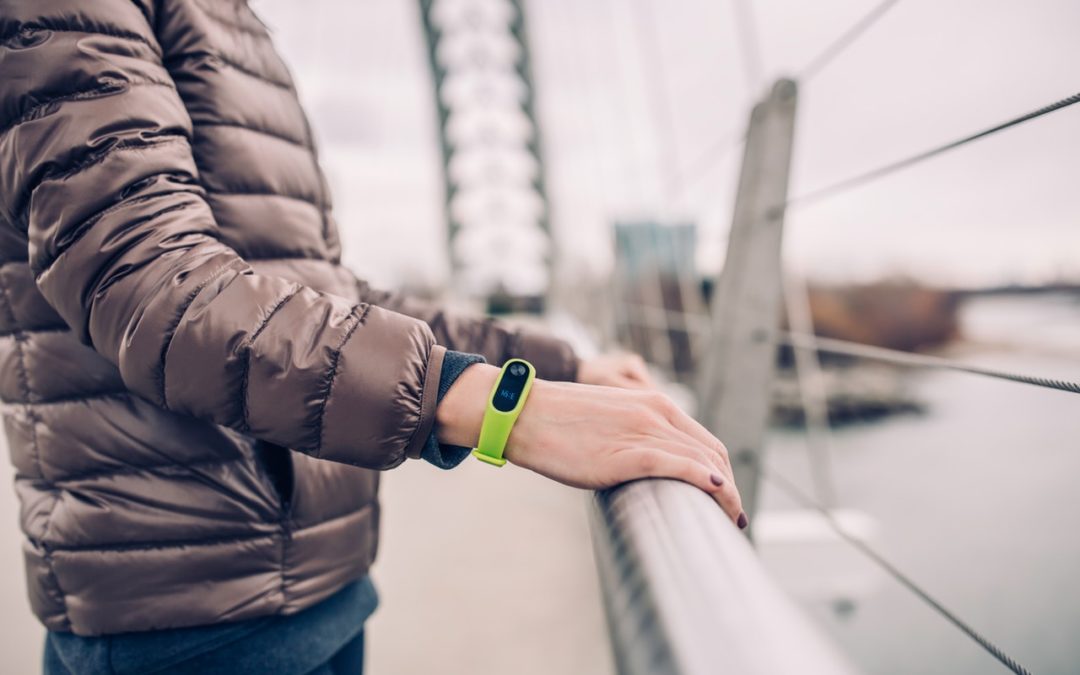
How Far Can The Smartwatch Go?
A lot of tech industry naysayers have been claiming for years that the smartwatch has maxed out its usefulness. This could not be further from the truth, as the smartwatch has continued to evolve each year since its initial launch. Here is a look at some of the major ways that smartwatch technology is developing.
- Advanced Health Monitoring
The health monitoring features on the smartwatch continue to improve year after year. This year’s model features a medical-grade heart monitoring application. The watch can already monitor sleep patterns, heart rate fluctuations, and blood pressure. Industry experts believe that in the next five years the watch might be able to detect blood sugar levels, stress levels, and even possess a cancer detection feature. Expect huge leaps in smartwatch biometrics monitoring in the years to come.
- Superior Battery Life
A major complaint regarding the smartwatch has been its battery life, with many consumers feeling like the battery should offer far more efficiency. Smartwatch innovators are currently working hard to extend the battery life by leaps and bounds. By making the smartwatch’s CPU, display technology, and other core features much more energy-efficient, it is thought that the battery life could be extended by 60 percent or more.
- Advanced Safety Features
With GPS tracking and video surveillance technology rapidly advancing lately, the smartwatch will eventually incorporate these safety-centric technologies. With a highly accurate built-in GPS tracker, parents can monitor their younger children’s whereabouts much more closely. The video surveillance and video chat features built into the smartwatch are also rapidly advancing, giving users the ability to display in real-time where they are at any given moment. Parents across the world will embrace these evolving safety features.
- They’re Becoming More Fashionable
The old days of the smartwatch were admittedly less than fashionable. The device looked fairly clunky and out of place on the wearer’s wrist. That is all changing, however, as the smartwatch is sleeker, more elegant, and more customizable than ever before. Smartwatch wearers no longer have to feel like their device is standing out due to its awkward appearance. The latest designs look like designer timepieces created by leading fashion brands.
- Advanced Damage Resistance
The early smartwatch models were prone to taking on damage quite easily as their LED screens were particularly delicate. That is not the case today, however, as the smartwatch feels like it is nearly indestructible. Advances in watch casing materials will eventually lead smartwatches to the point where they are nearly impossible to damage with heat, water, excess sunlight, or impact. Expect smartwatches in the future to feature titanium and other highly advanced composite materials.
- CPU Advances
There will come a day when a simple smartwatch rivals the computer processing power of some of today’s personal computers. The CPUs built into smartwatches are better than ever before and they’re evolving at warp speed. With advanced smartwatch features and greater processing demand coming from consumers, the smartwatch will continue to evolve to keep pace with all of the latest apps, features, and display capabilities. Apple is even working on highly-touted nano-technology that will be incorporated into smartwatches within five years.
- Advanced Commerce Features
It is quite tedious and difficult to purchase anything with today’s smartwatch models. That is expected to dramatically change in the future. Not only are advanced e-commerce options being incorporated into the latest smartwatch apps, but eventually people will be able to use their watch to pay for non-virtual goods and services. That’s right, over the next five years smartwatches will possess features that can purchase groceries, gasoline, and other basic essentials.
