
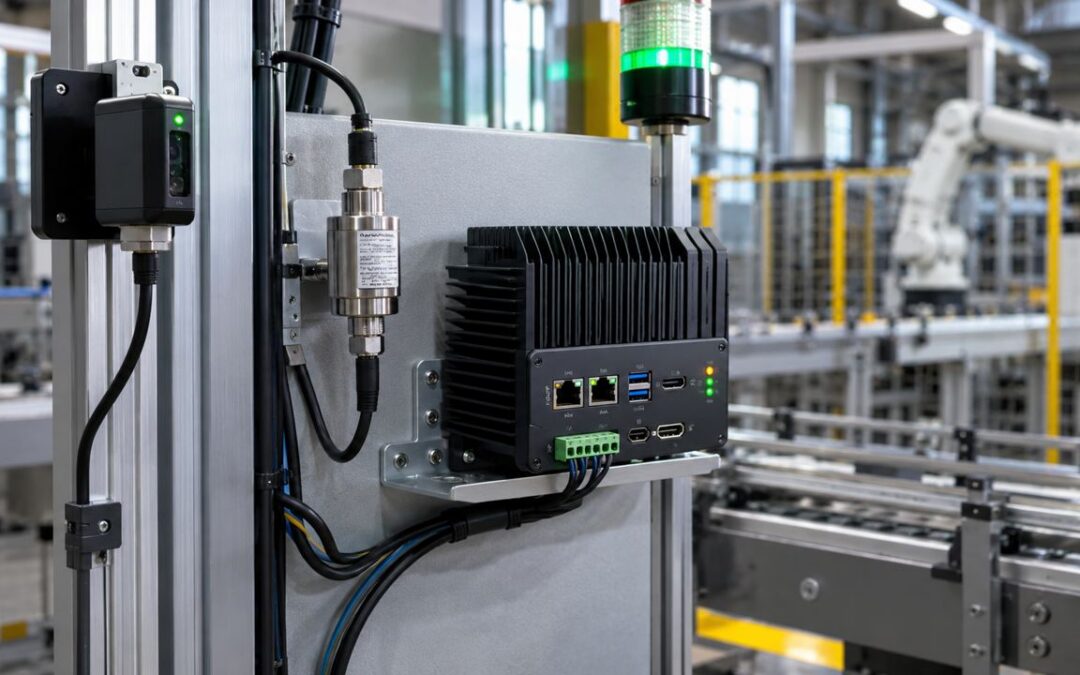
When we think about computing, it is easy to imagine information traveling to a distant data center, being processed and then returning to the person or device that needs it.
That model has supported an extraordinary expansion of digital services. But it is not always the best place to process every piece of information.
As sensors become more common and artificial intelligence is used in more physical environments, some computing is moving closer to the place where data is created. This approach is often called edge computing.
Why Distance Can Matter
Consider a machine on a factory floor. A sensor may record vibration, temperature or other signals throughout the day. Sending every measurement to a remote system is possible, but the application may benefit from processing some of that information locally.
Local processing can reduce the amount of data that must be transmitted and, for certain tasks, shorten the time between a measurement and a response. It can also allow some functions to continue when a network connection is unreliable.
That does not mean every application needs an immediate decision. A monthly maintenance report has different requirements from a system that must react to a changing condition. The appropriate design begins with understanding the task.
AI at the Edge
AI adds another dimension. A model running on a nearby device might identify a pattern in sensor data and send an alert or a summary to a central system. A camera could process an image locally instead of transmitting every frame.
There are tradeoffs. Smaller devices have limited power, memory and computing capacity. A model that works well in a large data center may need to be adapted, tested and monitored before it can operate reliably on a device.
Local decisions also need clear boundaries. In an industrial setting, an automated system should be designed around the consequences of an error and the safeguards appropriate to its use.
Cloud and Edge Work Together
Edge computing does not eliminate the need for cloud infrastructure. The two approaches can perform different parts of the same job.
A device may handle immediate measurements locally while a central platform stores historical information, coordinates many locations or supports more demanding analysis. Engineers can use the broader view to improve models and distribute updates back to devices.
The challenge is deciding what should happen in each place. Network costs, response time, energy use, reliability and the sensitivity of the information all matter.
Security and Maintenance Still Matter
A network of devices can be difficult to manage. Each device needs an appropriate way to receive updates, authenticate itself and recover from failures. Physical access, changing conditions and aging hardware can create challenges that are less visible in a controlled data center.
Processing data locally may reduce the need to send some information elsewhere, but it does not automatically make a system private or secure. Those outcomes depend on how the complete system is designed and operated.
Choosing the Right Place to Compute
The growth of edge computing reflects a broader change: computing is becoming more closely connected to the physical world.
The opportunity is not simply to put a processor everywhere. It is to place computing where it makes a useful difference, connect it to the rest of the system and keep it dependable over time. The strongest applications will be the ones that can explain why a local decision is worth making in the first place.
Don Basile writes about computing infrastructure, emerging technology and the practical work of turning innovation into useful systems.
